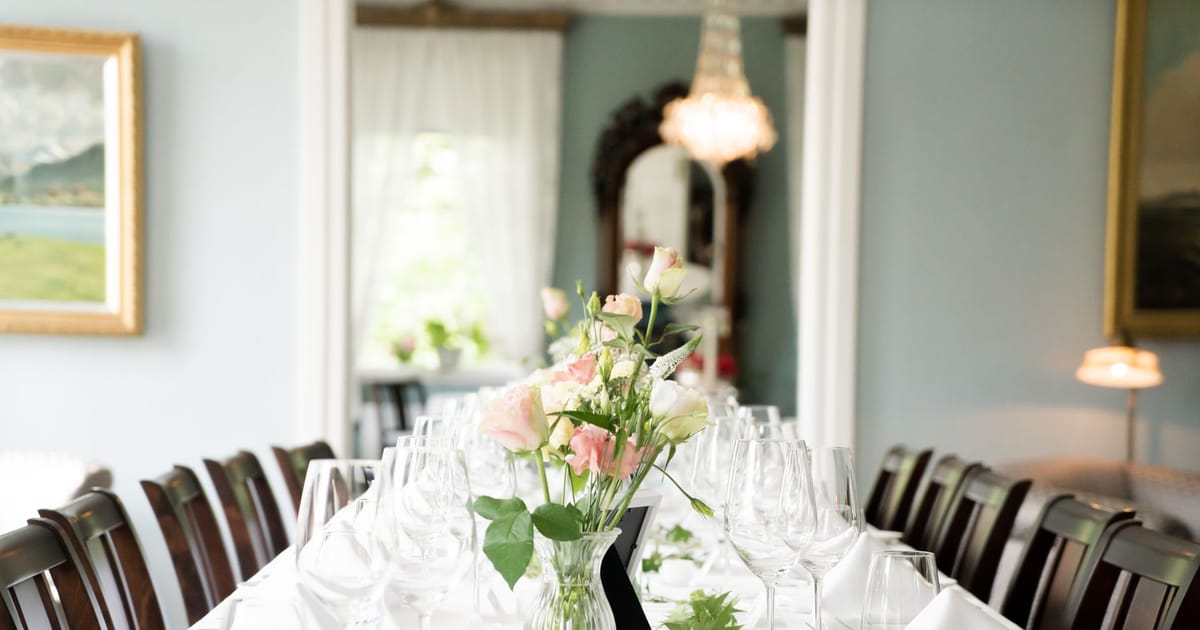
Private dining rooms rarely charge a flat rental fee. Most restaurants require a food-and-beverage minimum -- the amount your group must spend on food and drinks before tax and service charges. According to Thumbtack event-space cost data, F&B minimums typically range from $500 for a small weekday lunch to $10,000 or more for a Saturday-night buyout.
What Is a Food-and-Beverage Minimum and How Does It Work?
The food-and-beverage minimum -- commonly shortened to F&B minimum -- is the most important number in any private dining conversation. It is the least amount your group must collectively spend on food and drinks for the restaurant to make the space available.
Here is what the F&B minimum does and does not include, and why the distinction matters enormously for your budget.
The minimum is calculated on the pre-tax, pre-gratuity subtotal only. If your party runs up $2,000 in food and $800 in beverages before taxes and any service charges, your F&B spend is $2,800. That $2,800 is what counts toward meeting a $2,500 minimum -- you have met it. But the 22% service charge, sales tax, and any gratuity are calculated on top of that figure and do not help you reach the minimum. This distinction trips up most first-time private-dining planners, because it means the total bill for an event can run 35% to 45% higher than the minimum itself, once you add service charges (typically 20% to 24%, per National Restaurant Association operational guidance), state and local sales tax, and an optional gratuity.
Some venues apply the minimum to food only, not beverages. Others count the full food-and-drink subtotal. A small number of venues count a per-person prix fixe package toward the minimum automatically, so once you confirm guest count you know exactly where you stand. Ask the events coordinator to spell out exactly what counts -- in writing -- before you confirm the booking.
Get it in writing
Before you sign a deposit check or event contract, ask the venue coordinator to send you a written confirmation that states the F&B minimum amount, exactly what spending counts toward meeting it (food only, or food and drinks), and what the consequences are if your group falls short. A verbal "you can always order more wine" is not a contract. Venues occasionally interpret their own minimums differently in the final invoice.
If your group falls short of the minimum, most venues charge the difference as a room fee or a shortfall charge. Some venues convert the gap directly to food credit for a dessert course or a round of drinks; others invoice the shortfall on departure. Confirm this policy during your initial inquiry.
How Minimums Scale by Day, Time, and Room
Not all minimums are created equal. The same private dining room at the same restaurant can carry a dramatically different minimum depending on when you book, how many people you are hosting, and whether you want the room entirely to yourselves.
The table below illustrates how minimums typically vary across the key dimensions that venues use to price private space. Numbers are illustrative ranges based on Thumbtack and HomeAdvisor/Angi private event cost data; actual minimums vary widely by city and venue tier.
| Scenario | Typical F&B Minimum Range | Notes |
|---|---|---|
| Weekday lunch, 10-20 guests | $500 -- $1,500 | Lowest demand slot; many venues waive room fees |
| Weekday dinner, 10-20 guests | $1,000 -- $3,000 | Higher than lunch; still off-peak |
| Weekend lunch, 15-30 guests | $1,500 -- $4,000 | Brunch buyouts command a premium at popular spots |
| Friday or Saturday dinner, 20-40 guests | $3,500 -- $10,000+ | Prime-time slots carry the highest minimums |
| Full restaurant buyout, any day | $10,000 -- $50,000+ | Venue-dependent; upscale cities run higher |
| Semi-private / partitioned section | $300 -- $2,000 | Lower minimum, less privacy; shared kitchen server |
Ranges drawn from Thumbtack event-space cost data and HomeAdvisor/Angi private event project estimates as of 2024. Major metro venues (New York, Los Angeles, Chicago, San Francisco) routinely sit at the upper end of or above these ranges.
The day-of-week premium is real and significant. A private dining room at a well-regarded urban restaurant might carry a $1,500 minimum on a Tuesday evening and a $6,000 minimum on a Saturday night for the same room and the same guest count. If your event date is flexible, asking a venue for their weekday minimum can unlock a dramatically lower threshold -- often with the same menu, same staff ratio, and identical experience.
Room size matters just as much as timing. A room that seats 12 comfortably and a room that seats 45 are priced in different universes. Venues set minimums based on how many revenue-generating covers the room can normally turn -- a 45-seat private room on a Saturday night represents significant displaced revenue, and the minimum reflects that.
Ask about off-peak pricing
If your event date is flexible by even one or two days, the savings can be substantial. A $5,000 Saturday minimum at a popular restaurant might fall to $1,800 on a Thursday. Ask the coordinator: "What is your minimum for the same room on a weekday?" Many venues are happy to share this without negotiating -- it is standard pricing information, not a secret.
Semi-Private vs. Fully Private vs. Buyout: What Each Costs
Private dining comes in three arrangements -- knowing which you need before you call prevents sticker shock in both directions.
Semi-private dining means a partitioned section of the restaurant, not a fully enclosed room. Sight lines and ambient noise may carry from the main floor. The trade-off is a lower minimum -- often $300 to $2,000 -- and more menu flexibility. Common for business dinners and birthday groups under 20.
Fully private dining is the standard meaning: an enclosed room with a dedicated server, its own entrance, and no main-floor traffic. These rooms command higher minimums, especially on weekend evenings, because the restaurant is giving up main-floor covers to hold the space.
Full restaurant buyout means the entire venue for the evening -- every table, the bar, and any private room. Buyouts suit corporate dinners, rehearsal dinners, and milestone events. Per HomeAdvisor/Angi private event space data, full buyouts at fine-dining venues in major cities typically require $15,000 to $50,000 or more in food and beverage, plus a possible facility fee. Lead time is four to twelve weeks minimum, with a signed contract and substantial deposit.
What Is Typically Included -- and What Costs Extra
Typically included: a dedicated server or event captain, a reserved space for a two- to three-hour block, and basic setup -- linens, a centerpiece, flatware. Many rooms include a screen or monitor; some upscale venues include printed menus per guest.
What commonly costs extra: AV beyond the basics (microphone, presenter clicker, laptop adapters), floral upgrades, custom printed menus, coat-check, valet, and specialty bar setups. Always ask for an itemized inclusions list before assuming anything beyond a table and a server.
Service charges and gratuity: Most restaurants add a service charge of 20% to 24% to private event bills, per National Restaurant Association data. This charge is not automatically a tip. Ask the venue whether it goes to staff or to overhead, and whether an additional gratuity is expected. The Emily Post Institute recommends 15% to 20% on top of any service charge that does not go directly to servers.
Sales tax: Applied on top of food, beverages, and service charges in most states, at rates of 5% to 10%. It does not count toward the F&B minimum.
When comparing venues, benchmark on a fully loaded number -- minimum plus 22% service charge plus applicable sales tax. A $3,000 minimum typically becomes a $3,900 to $4,200 check before any additional gratuity.
For help choosing the right restaurant in the first place, see our guide on how to choose a restaurant for a special occasion.
Budget note
A $2,500 F&B minimum does not mean a $2,500 event. With a 22% service charge and 8% sales tax, that minimum becomes roughly $3,250 before any optional gratuity. Build your real budget by multiplying the minimum by 1.30 to 1.45 to get a realistic all-in estimate. Then add anything outside the minimum -- room fees, AV, florals -- on top of that figure.
Menu Options: Prix Fixe, A La Carte, or Family Style
The menu format your private dining event uses affects both how predictable the bill will be and how easily your group can hit the minimum without overspending.
Prix fixe menus are the most common format for private dining events. The restaurant offers a set number of courses at a fixed per-person price, making it easy to calculate whether your headcount will meet the minimum before you arrive. A 20-person party on a $75 per-person prix fixe spends $1,500 on food automatically, which the venue and your group can both plan around. For a deeper look at how prix fixe pricing compares to ordering a la carte, see our guide on prix fixe vs a la carte -- the cost difference is often more significant than guests expect.
A la carte ordering gives guests full menu freedom but makes the final bill unpredictable. Guests who order modestly may leave the room well short of the minimum; guests who order enthusiastically (several bottles of wine, multiple desserts) may push the total well above it. Some restaurants allow a la carte ordering in private rooms only for smaller groups or on weekday evenings when the minimum is lower and the stakes of a shortfall are smaller.
Family-style service -- large shared platters for the table rather than individual plated courses -- is common at casual private dining venues, Italian-American restaurants, and Asian restaurants with private room capacity. Pricing is typically per-person or per-table based on a set menu. Family style is friendly to diverse dietary needs and works well for groups that want a relaxed, communal feel rather than a formal event.
Deposits, Cancellation Terms, and What to Watch For
Private dining rooms involve real commitments on both sides. Understanding the financial terms before you sign protects you from unexpected losses if plans change.
Deposits: Most restaurants require a deposit of 20% to 50% of the F&B minimum to hold a private room, according to HomeAdvisor/Angi event space cost data. Some venues charge a flat deposit fee of $200 to $500 regardless of the minimum. The deposit is almost always non-refundable if you cancel within a defined window -- commonly seven to thirty days before the event date. Confirm the deposit amount and whether it is credited toward your bill on the evening or held as a separate security payment.
Cancellation policies: Cancellation terms vary significantly. Some restaurants retain only the deposit if you cancel within the penalty window; others charge the full minimum or a percentage of it. Weekend slots at high-demand venues carry stricter terms because the opportunity cost of holding a Saturday-night private room is higher. Read the cancellation clause carefully before signing -- especially if your event date or guest count may shift.
Guest-count minimums and maximums: Private rooms have capacity floors as well as ceilings. A room that comfortably seats 30 may require a minimum of 15 guests for the venue to staff and use the space efficiently. Showing up with 10 people in a room set for 30 is awkward for guests and operationally difficult for staff. If your final guest count changes significantly after booking, notify the venue early -- many can adjust the setup or menu arrangement if given advance notice.
Get it in writing
Ask for the full deposit, cancellation, and shortfall terms in the written event contract or confirmation email before you pay anything. Do not rely on the coordinator's verbal summary. Policies differ between events staff and general managers at the same restaurant -- the written document is the one that matters if there is a dispute.
How to Hit the Minimum Without Overspending
The F&B minimum creates an unusual planning problem: you need to spend at least a set amount without overshooting dramatically.
Back-calculate from headcount first. Divide the minimum by your confirmed guest count. A $2,400 minimum with 20 guests means $120 per person in food and drinks before tax and service charges. Compare that against the restaurant's a la carte or prix fixe pricing to see whether the threshold is realistic or whether you will need to lean on beverages to close the gap.
Use beverages strategically. Beverage spending counts toward most F&B minimums dollar for dollar. A mid-range bottle of wine per three guests plus a round of cocktails can close a meaningful gap. Ask the sommelier or events coordinator to help calibrate wine selections to your target bill.
Choose a prix fixe that aligns with the minimum. A set menu priced at $85 per person against a $90 per-person minimum means you arrive at the event nearly at threshold before ordering a single drink. For context on what different prix fixe price points deliver, see our guide on prix fixe vs a la carte.
Avoid padding. Ordering food the group will not eat is wasteful. Ask the events coordinator whether beverage packages or dessert upgrades can bring the bill to the right place without unnecessary food courses.
For baseline per-person spending norms by restaurant tier, our guide on average cost of a restaurant meal in the US helps gauge whether a given minimum is realistic for your group.
The minimum is not the total
The F&B minimum is what you spend on food and drinks before tax and service charges. Add a 22% service charge and 6% to 9% state sales tax, and a $3,000 minimum becomes a real bill of $3,840 to $3,990 before any gratuity. Always plan to the all-in number.
Frequently asked questions
How much does a private dining room cost?
Most restaurants do not charge a flat room rental fee. Instead they require a food-and-beverage minimum -- the total pre-tax, pre-gratuity amount your group must spend on food and drinks. According to Thumbtack event-space cost data, F&B minimums for a private dining room typically range from $500 for a small weekday lunch to $10,000 or more for a full Saturday-night buyout at an upscale venue.
What is a food-and-beverage minimum and how is it calculated?
A food-and-beverage minimum (F&B minimum) is the least amount your group must spend on food and drinks combined to use the private space. The minimum is calculated on the pre-tax, pre-gratuity subtotal. If your group spends $1,800 on food and $700 on drinks before tax and service charge, your F&B spend is $2,500 -- which counts toward meeting the minimum. Tax and service charges do not count.
Is there a room fee on top of the food-and-beverage minimum?
Sometimes. Fully private rooms at upscale or high-demand restaurants may carry both an F&B minimum and a flat room fee, which can range from $200 to $1,500 or more, according to HomeAdvisor/Angi private event space cost data. The room fee applies regardless of whether your group meets the minimum. Always ask whether a room fee exists before discussing the minimum.
What service charge applies to a private dining event?
Most restaurants add a service charge of 20% to 24% on top of the food-and-beverage total for private events, according to National Restaurant Association operational data. This charge is typically not the same as a tip -- it often covers event staffing, setup, and administrative overhead. Ask the venue whether any portion goes directly to the servers, and whether an additional gratuity is expected or customary.
What questions should I ask before booking a private dining room?
Ask: What is the F&B minimum, and does it count pre-tax and pre-gratuity? Is there a separate room fee? What service charge applies, and does it go to staff? What is the deposit amount and cancellation policy? Is there a set menu or can we order a la carte? Are AV equipment and linens included? What is the minimum and maximum headcount for the space?