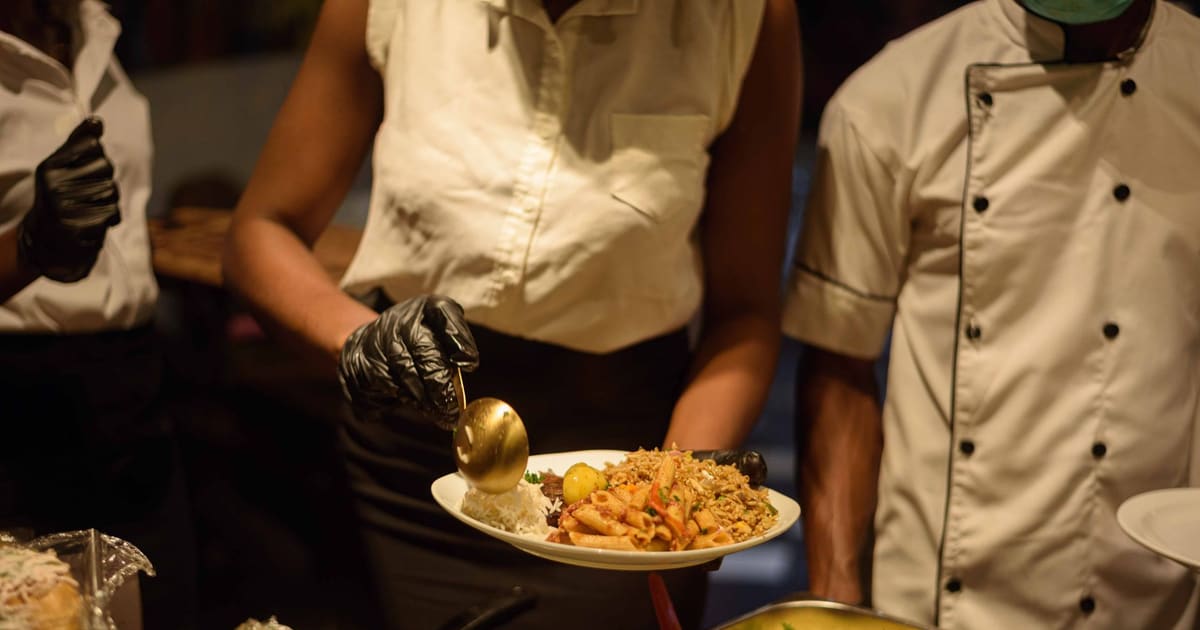
A prix fixe menu charges one price for a set sequence of courses -- typically two to four -- with a limited number of choices at each course. A la carte lets you order any item on the menu and pay for each one individually. For most diners, prix fixe saves money when you plan to eat multiple courses anyway; a la carte wins when you want just an entree or two items and do not want to pay for courses you will skip.
What Each Format Actually Means
Prix fixe
Prix fixe is French for "fixed price." You pay one quoted amount -- say, $55 or $85 -- and in return you receive a defined progression of courses. A common structure is three courses: a starter, a main, and a dessert, each with two or three choices. Some restaurants offer two-course formats (starter plus main) at a lower price point; others build a four-course meal that includes a cheese or pre-dessert interlude.
The key characteristic is that the price does not move based on which option you pick within each course. Whether you choose the salmon or the duck for your entree, the bill stays the same. That bundling is what makes prix fixe good value when you are going to eat the whole meal anyway.
Restaurant Week programs -- supported nationally by the National Restaurant Association -- are built on this logic, offering two- or three-course menus at promotional prices well below what those dishes would cost a la carte. If you have not tried a restaurant you are curious about, Restaurant Week is often the most cost-effective moment to go.
A la carte
A la carte means each item on the menu carries its own price, and you order -- and pay for -- exactly what you choose. You might order one appetizer and one entree, or two appetizers and skip dessert, or a main course and nothing else. The bill reflects only what you actually ordered, not a bundled course progression.
A la carte gives you full control over your spend and your appetite. It is the natural format for light eaters, diners who want to share a few dishes across the table, or anyone whose dietary restrictions make a set-course progression complicated. It is also the default format at most casual and mid-range restaurants, according to Toast's State of the Restaurant Industry annual report.
Tasting menus
A tasting menu is a more elaborate form of prix fixe: a chef-curated sequence of many small courses -- typically six to twelve -- designed to express the kitchen's full range. Flexibility is minimal; you take the menu as designed, with allergies communicated in advance.
Tasting menus are typically the most expensive dining format. The price reflects both premium ingredients and the labor of preparing a dozen carefully plated courses. Wine pairings are almost always priced as an add-on and can match or exceed the food cost on their own.
The Comparison Table
The three formats differ across several dimensions that matter before you book.
| Format | Pricing model | Typical course count | Flexibility | Best for | Typical cost posture |
|---|---|---|---|---|---|
| A la carte | Per-item; pay for what you order | 1 to whatever you choose | Full | Light eaters, sharers, guests with restrictions | Lowest when ordering 1-2 items; variable overall |
| Prix fixe | One price for a set progression | 2 to 4 | Limited choices per course | Anyone eating a full multi-course meal | Often 10-25% less than a la carte equivalents, per Square data |
| Tasting menu | One price for chef-curated sequence | 6 to 12 or more | Very limited; allergies only | Serious diners seeking a full culinary experience | Typically the highest-cost format; varies widely by venue |
Ranges reflect industry norms reported by Square and the National Restaurant Association; actual costs vary by restaurant, city, and season.
When Prix Fixe Is the Better Value
Prix fixe delivers genuine savings in specific circumstances. Understanding those circumstances prevents you from paying a bundle for courses you did not want.
You were going to eat the full meal anyway. If you typically order a starter, a main, and something sweet at the end, a three-course prix fixe almost always costs less than ordering those items individually from the a la carte menu. According to Square restaurant industry data, the bundled discount on a prix fixe relative to a la carte pricing on the same courses typically runs 10 to 25 percent, though that figure varies significantly by restaurant and market. The arithmetic is simple: add up the a la carte prices of the dishes you would choose from each course, then compare them to the prix fixe price. If the prix fixe is equal or lower, it is the better deal.
Restaurant Week, holidays, and promotional periods. Many restaurants introduce prix fixe menus specifically as a value proposition during promotional periods, offering price points well below typical a la carte spend. Restaurant Week programs, coordinated by city restaurant associations and supported nationally by the National Restaurant Association, are specifically designed to make fine-dining experiences accessible to budget-conscious guests.
Special occasions at higher-end restaurants. Restaurants that position themselves in the upper price tiers often structure their menus around prix fixe formats, sometimes exclusively. If you have booked a restaurant in the $$$$ range for an anniversary or milestone dinner, the prix fixe is likely not only the value option -- it may be the only option. Understanding what you are paying for, and confirming that supplements and wine are handled separately, is the useful preparation. See our guide on restaurant price tiers explained for a clear breakdown of what each pricing tier signals about format and expectations before you arrive.
When A La Carte Is the Smarter Choice
A la carte is not just a fallback when no prix fixe is offered. In several common situations, it is clearly the better financial and practical decision.
You are a light eater. If you typically eat an entree and nothing more, a two-course prix fixe forces you to order -- and pay for -- a starter you may not want. The bundled savings disappear the moment you are buying courses you would not have chosen individually. A la carte lets you eat to your actual appetite.
You want to share dishes across the table. Sharing is one of the most effective ways to sample more of a menu without overspending, and it works naturally with a la carte ordering. Prix fixe menus are generally designed for individual progression -- one set of courses per diner -- which makes sharing awkward and sometimes explicitly limited by the restaurant's structure.
Dietary restrictions narrow the set menu. A two-choice-per-course prix fixe can become genuinely limiting when allergies, intolerances, or strong preferences eliminate one of the two options at each course. A la carte gives you the full menu to navigate, and most restaurants are better positioned to accommodate modifications on individual dishes than on a structured tasting progression. For a similar reason, prix fixe can be a poor fit for mixed groups where one person eats very differently from the rest.
You are comparing casual mid-range restaurants. The U.S. Bureau of Labor Statistics food-away-from-home Consumer Price Index tracks average spending on restaurant meals across income brackets and dining occasions. At casual and mid-range restaurants -- which represent the bulk of American dining occasions -- a la carte is the norm and ordering a single entree is an entirely normal visit. You are not missing a deal by skipping a prix fixe that does not exist.
The restaurant week math rule
During Restaurant Week, add up the a la carte prices of the dishes you would choose from the prix fixe menu. If the set price is lower -- which it almost always is at participating restaurants -- book it. If the choices per course are so narrow that you would not actually order any of them a la carte, skip it. The deal only exists if you want what is on the set menu.
The Hidden Costs Inside Prix Fixe and Tasting Menus
Prix fixe is not always the all-in price it appears to be. Several add-on costs are common enough that you should confirm them before you sit down.
Dish supplements. Many prix fixe and tasting menus include a small number of premium dishes that carry a surcharge even within the set format. A line on the menu might read "Wagyu beef supplement +$28" or "Caviar service +$45." These are opt-in, but if the premium option is the one you actually want, the effective cost of the prix fixe rises beyond the headline price. Scan the menu carefully before you order.
Wine pairings. Tasting menus almost universally offer a wine pairing -- a glass selected to complement each course -- priced separately. At fine-dining venues it can match or exceed the food price. A tasting menu listed at $175 per person might carry a $120 wine pairing, making the combined cost $295 before tax and service. Non-alcoholic pairing menus (juices, teas, broths) are increasingly available at a lower price point.
Mandatory service charges. Many fine-dining and tasting-menu venues add a service charge of 18 to 22 percent to the bill, according to Toast's State of the Restaurant Industry annual report. Unlike a voluntary tip, this is not negotiable and appears as a line item on your check. Some restaurants are transparent that the charge replaces the tip; others expect an additional tip on top of it. Ask before you order -- or check OpenTable notes and recent reviews.
Beverages are rarely included. Whether you are on a prix fixe or ordering a la carte, non-alcoholic beverages -- sparkling water, soft drinks, coffee, tea -- are almost never included in the prix fixe price and are billed separately. This is worth noting for budget planning at celebratory dinners where a table of four might order multiple rounds of beverages across a two-hour meal.
Before you commit to a tasting menu
Confirm three things in advance: (1) whether there are dish supplements that will add to the quoted price, (2) whether the wine pairing is optional and what it costs, and (3) whether a service charge or mandatory gratuity will be added to your bill. At a venue where the tasting menu is $175, the pairing is $120, and a 20 percent service charge applies, your all-in cost before tax is $354 per person. That is a very different number from the $175 on the website.
For more context on what private or special-occasion dining arrangements typically cost and what they include, see our guide on private dining room cost and minimum spends.
How to Do the Math Before You Book
Comparing prix fixe to a la carte takes four steps.
Step one: identify the a la carte equivalents. For each course on the prix fixe, note the individual a la carte price of the dish you would actually order. Add them up.
Step two: compare to the prix fixe price. If the prix fixe is equal to or less than that sum, it is the better deal. If it costs more, a la carte is cheaper for what you actually want.
Step three: add supplements and pairings. If you want a supplement dish or wine pairing, add those costs to the prix fixe price before comparing. The headline price understates the real cost when supplements are in play.
Step four: apply the service charge. If the venue adds a mandatory service charge, calculate it against the full total -- food plus supplements -- not just the base food price. That final figure is what you compare to the a la carte alternative.
Holiday prix fixe -- what to expect
On Valentine's Day, Mother's Day, New Year's Eve, and Christmas Eve, many restaurants suspend their regular a la carte menu entirely and operate on a prix fixe basis, often at a price premium of 30 to 60 percent above a typical evening, according to National Restaurant Association holiday dining surveys. If you have a preference for a la carte flexibility on these dates, call the restaurant to confirm which format they will be running before you book -- and if prix fixe is mandatory, verify what the all-in cost looks like with supplements and wine.
Putting It Together
Prix fixe earns its value when you are eating a full multi-course meal anyway, when a promotional event or Restaurant Week makes the bundle genuinely cheap, or when the restaurant structures its experience around a set progression. Tasting menus earn their cost when the chef's vision is the point of the evening -- but confirm supplements, pairings, and service charges before you commit, since they frequently double the headline price.
A la carte wins when you are a lighter eater, when sharing and flexibility matter, and when the total for what you actually want is lower than the prix fixe minimum. For most casual and mid-range dining in the US, a la carte is the default for a reason: it matches how most people actually eat.
For more context on what a typical restaurant meal costs across different settings, see average cost of a restaurant meal in the US.
The one comparison that matters
Add up the a la carte prices of the specific dishes you would order from each prix fixe course. If the set price is lower, take the prix fixe. If it is equal or higher -- or if the choices do not include anything you actually want -- order a la carte. Do the math before you sit down.
Frequently asked questions
What is the difference between prix fixe and a la carte?
Prix fixe sets a single price for a defined sequence of courses -- usually two to four -- with limited choices at each course. A la carte lets you order any item on the menu individually, paying for each one separately. Prix fixe rewards guests who plan to eat multiple courses; a la carte rewards lighter eaters who want only an entree or two items.
Is prix fixe cheaper than ordering a la carte?
It depends on how many courses you actually want. If you would order a starter, entree, and dessert anyway, a three-course prix fixe often costs 10 to 25 percent less than ordering those same dishes individually, according to Square restaurant industry data. If you only want an entree, a la carte will almost always be less expensive than being locked into a two- or three-course minimum.
What is a tasting menu and how is it different from prix fixe?
A tasting menu is a chef-curated sequence of many small courses -- typically six to twelve -- designed to showcase the kitchen's range. It is a form of prix fixe (one price for a set progression), but more elaborate and typically more expensive. Standard prix fixe menus usually run two to four courses with real choices per course; tasting menus offer less flexibility and considerably more courses at a higher price point.
What extra costs should I watch for on a prix fixe menu?
Watch for dish supplements listed on the menu, usually for premium ingredients like foie gras, wagyu beef, or caviar -- these add to the fixed price even though you are already on a set menu. Wine pairings on tasting menus are priced separately and can match or exceed the food cost. Many tasting-menu venues also add a mandatory service charge of 18 to 22 percent. Check for all three before you sit down.
Do restaurants force prix fixe on holidays?
Many do. Valentine's Day, New Year's Eve, Mother's Day, and Christmas Eve are the most common occasions when restaurants replace their a la carte menu entirely with a prix fixe format, often at a significant premium over a typical evening. The National Restaurant Association notes that holiday prix fixe menus are a widespread industry practice. If you prefer a la carte flexibility, confirm the format when you book.